1. Meaning and Definition:
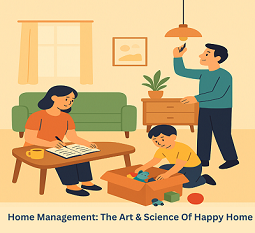
Home Management is the art and science of managing home resources to achieve family goals efficiently and happily.
It involves planning, organizing, controlling, and evaluating the use of available resources (like time, money, energy, and materials) to provide a comfortable and balanced life for all family members.
Definitions:
-
Nickell and Dorsey (1947):
“Home management is the process of using the family resources for achieving family goals.”
-
Gross and Crandall:
“Home management is the effective utilization of resources for the satisfaction of human wants.”
2. Objectives of Home Management:
1. To achieve family goals:
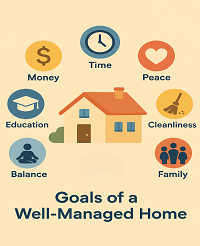
Every family has goals — e.g., good education for children, health, savings, or comfort. Home management helps achieve them efficiently.
2. To utilize resources wisely:
Resources like money, time, energy, and skills are limited. Home management ensures they are used efficiently.
3. To create harmony and peace:
A well-managed home reduces confusion, stress, and conflicts.
4. To maintain a healthy and comfortable living environment:
Clean, organized, and safe surroundings improve physical and mental well-being.
5. To ensure economic stability:
Good management avoids overspending and encourages saving and investment.
6. To simplify and improve daily tasks:
Work simplification saves time and energy.
7. To prepare family members for responsibility and cooperation.
3. The Process / Steps of Home Management:
Like any management system, home management follows four major steps:
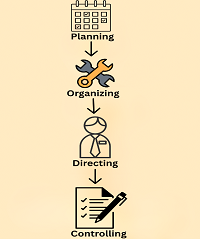
1. Planning:
“Thinking before doing.”
- Decide what needs to be done, how, and when.
- Involves goal setting and resource planning.
Examples:
- Making a meal plan for the week.
- Creating a monthly household budget.
- Scheduling cleaning or repair work.
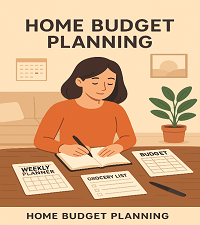
Steps in Planning:
- Identify problems or goals.
- Collect information.
- Explore alternatives.
- Choose the best plan.
- Set time and budget.
2. Organizing:
“Arranging everything in proper order for smooth working.”
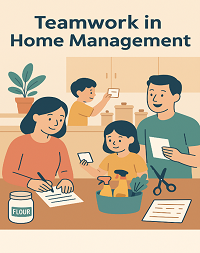
- Arranging and allocating resources to carry out the plan.
- Involves division of labor and proper placement of tools and materials.
Examples:
- Assigning kitchen work among family members.
- Keeping cleaning supplies together.
- Labeling storage containers.
3. Directing (Implementation):
“Putting the plan into action.”
- Encouraging and guiding family members.
- Communication and teamwork are important.
Example:
- Leading by example during household tasks, giving clear instructions.

4. Controlling / Evaluating:
“Checking whether the goals were achieved.”
- Comparing results with the plan.
- Identifying problems and making improvements.
Example:
Checking monthly expenses against the budget.

4. Elements (Components) of Home Management:
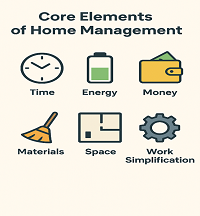
| Elements | Description | Examples |
| Time Management | Using time efficiently to complete tasks without stress. | Creating daily routines, using timers for chores. |
| Energy Management | Avoiding physical and mental exhaustion by simplifying work. | Using labor-saving appliances, organizing workflow. |
| Money Management | Planning, budgeting, saving, and spending wisely. | Family budget, emergency fund, savings plan. |
| Material Management | Proper use and maintenance of household items, food, and tools. | Organizing kitchen, reusing, repairing instead of replacing. |
| Space Management | Efficient use of living space to ensure comfort and convenience. | Decluttering rooms, proper furniture arrangement. |
| Work Simplification | Reducing unnecessary steps in a task. | Keeping tools within reach, following proper sequence in cooking. |
5. Areas of Home Management
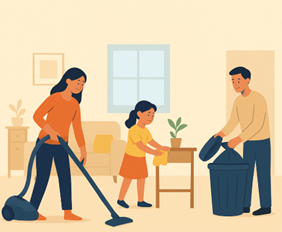
Housekeeping & Hygiene:
- Cleaning, dusting, waste disposal, and pest control.
- Ensures health and aesthetic appeal.
Food Management:
- Meal planning, cooking, nutrition, and storage.
- Maintaining balanced diets and avoiding food wastage.

Clothing & Laundry Management:
- Selecting, washing, ironing, and repairing clothes.
- Proper storage and seasonal organization.

Financial Management:
- Budgeting, saving, and record keeping.
- Avoiding debt and ensuring financial security.

Child & Family Care:
- Meeting emotional, educational, and physical needs.
- Time management for children and elders.

Home Safety & Maintenance:
- Ensuring protection from accidents and hazards.
- Checking electrical systems, fire safety, locks, etc.

Recreation & Leisure:
- Planning family recreation for relaxation and bonding.

Environmental Management:
- Eco-friendly practices like recycling, energy saving, and waste segregation.

6. Principles of Home Management:
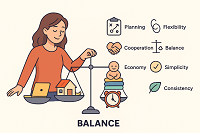
- Planning before doing – Always think ahead.
- Flexibility – Be ready to adjust plans if needed.
- Cooperation – Share responsibilities among family members.
- Work simplification – Avoid unnecessary steps.
- Balance – Maintain equilibrium between work, rest, and play.
- Economy – Avoid wastage of time, money, and energy.
- Consistency – Regular routines build discipline and efficiency.
7. Home Management Resources:
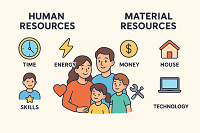
- Resources can be divided into two main types:
1. Human Resources:
- Time
- Energy
- Knowledge and skills
- Attitude
- Health
- Family cooperation
2. Non-Human (Material) Resources:
- Money
- Goods and equipment
- House and furniture
- Community facilities
- Technology
Proper management depends on balancing both types.
8. The Home Management Process (Example):
Example: Organizing a Birthday Party
| Step | Activity | Outcomes |
| Planning | Decide date, budget, guest list, menu, decorations | Clear plan |
| Organizing | Purchase materials, assign duties to family | Smooth preparation |
| Directing | Motivate and guide family, supervise arrangements | Cooperation |
| Controlling | Check expenses and feedback | Learn for future events |

9. Modern Trends in Home Management:
Smart Home Technology:
Automated appliances, apps for energy saving, digital to-do lists.
Sustainability:
Using eco-friendly materials, reducing waste, composting.
Online Financial Tools:
Apps for budgeting, expense tracking, and shopping.
Work-Life Balance:
Managing home and professional responsibilities together.
Minimalism:
Keeping only what’s needed to save space, time, and energy.

10. Importance of Home Management:
- Promotes efficiency and order in daily life.
- Ensures harmony and cooperation in the family.
- Prevents stress, confusion, and resource wastage.
- Helps in financial control and savings.
- Builds self-reliance and responsibility.
- Contributes to a peaceful, healthy, and happy home life.
11. Example of Daily Home Management Routine:
| Time | Task | Tip |
| Morning | Cleaning, breakfast, getting kids ready | Keep supplies handy |
| Afternoon | Cooking, laundry, budgeting | Use time-saving tools |
| Evening | Family time, light cleaning | Prepare for next day |
| Night | Review tasks, relax | Maintain routine sleep schedule |

12. Tips for Effective Home Management:
- Make a weekly plan and stick to it.
- Keep a family calendar for appointments and bills.
- Follow a place for everything rule.
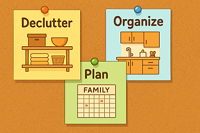
- Declutter regularly.
- Set realistic goals and reward family cooperation.
- Practice work simplification and energy conservation.
- Maintain records of expenses and maintenance schedules.