
Adversity Quotient and Its Complications in Relationship Development
- January 29, 2026
- 0 Likes
- 1137 Views
- 0 Comments
What is Adversity Quotient (AQ)?
Adversity Quotient is a psychological measure of how people perceive, respond to, and recover from life’s challenges, setbacks, and stress. It was introduced by Dr. Paul Stoltz and is often used alongside IQ (intelligence quotient) and EQ (emotional quotient).
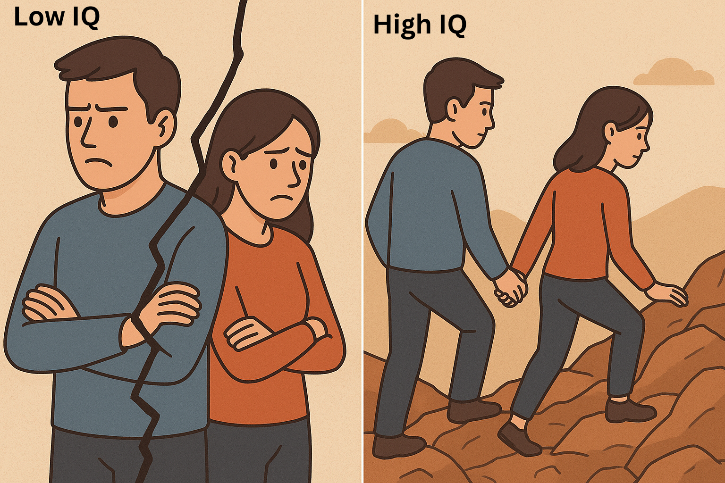
High AQ → Resilient, problem-solver, adaptable, sees challenges as opportunities.
Low AQ → Easily discouraged, avoids responsibility, struggles to cope with stress.

Why AQ Matters in Relationships:
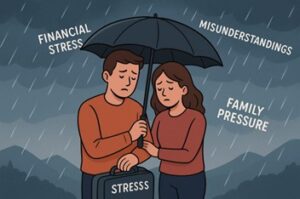
Relationships—whether romantic, familial, or friendships—are constantly tested by adversity: financial struggles, misunderstandings, external pressures (family, work, health), and emotional differences.
AQ influences how partners face problems together and whether challenges strengthen or weaken the relationship.
Complications in Relationship Development When AQ is Low:
-
Stress Mismanagement:
Low AQ individuals may not handle stress well. Instead of solving issues, they:
- Become irritable, angry, or emotionally distant.
- Transfer stress onto their partner, causing tension.
Example: After a bad day at work, instead of sharing calmly, one partner lashes out, damaging emotional closeness.

-
Avoidance of Conflict:
When faced with disagreements, they may shut down, ignore the problem, or run away instead of resolving it.
- This leads to unresolved issues piling up.
- Emotional distance grows over time.
Example: One partner avoids discussing financial struggles, which later explodes into bigger arguments.

-
Blame and Negative Coping:
Instead of taking responsibility, they may:
- Blame their partner for problems.
- Use criticism, sarcasm, or defensiveness.
Result: Creates a cycle of accusations rather than cooperation.

-
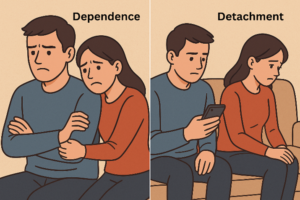
Dependence or Detachment:
Low AQ individuals may:
- Over-depend on their partner for solutions and emotional regulation → burdening them.
- Detach emotionally to escape stress → leaving their partner feeling unsupported.
-
Erosion of Trust and Security:
If adversity is not faced together:
- One partner may feel abandoned.
- Repeated failures to overcome challenges weaken trust.
- Long-term commitment may be questioned.
Example: A couple facing infertility may struggle—if one partner gives up easily, the other feels isolated.

-
Reduced Empathy and Support:
A person overwhelmed by their own struggles may lack space to:
- Listen empathetically to their partner.
- Offer comfort and reassurance.
Result: Emotional imbalance → one feels over-giving while the other is self-focused.

Positive Side – High AQ in Relationships:
When both partners have high AQ, the relationship benefits:
Shared Resilience: Challenges strengthen the bond instead of breaking it.
Solution-Focused Communication: Less blame, more teamwork.
Emotional Safety: Both feel supported and understood.
Growth Together: Adversity becomes a learning experience, deepening intimacy.
Conclusion:
Adversity Quotient is a hidden but crucial factor in relationship development.
Low AQ complicates growth through stress mismanagement, avoidance, blame, dependency, and lack of empathy → leading to weakened trust and intimacy.
High AQ fosters resilience, mutual support, and deeper bonding → making relationships stronger even during hardships.
