
Emotional Intelligence (EI) & Emotional Quotient (EQ)
- January 31, 2026
- 0 Likes
- 1079 Views
- 0 Comments
-
Emotional Intelligence (EI):
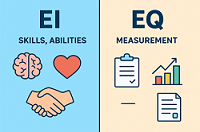
Definition: A set of skills and abilities related to recognizing, understanding, and managing emotions in yourself and others.
Origin: Popularized by psychologists Peter Salovey & John Mayer (1990) and later by Daniel Goleman (1995).
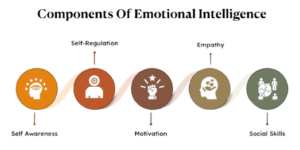
Components (Goleman’s Model):
- Self-Awareness – recognizing your own emotions and their impact.
- Self-Regulation – managing disruptive emotions and impulses.
- Motivation – using emotions to stay driven and achieve goals.
- Empathy – understanding emotions in others.
- Social Skills – building healthy relationships and effective communication.
Key Point: EI is the actual ability or competence you demonstrate in real life.
-
Emotional Quotient (EQ):
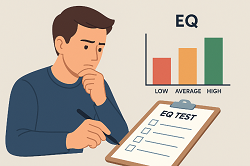
Definition: The measurement of your Emotional Intelligence through tests, assessments, or observations.
Analogy: Just like IQ is a score for intelligence, EQ is a score for EI.
Measurement Tools:
Self-report tests (e.g., EQ-i by Reuven Bar-On).
Ability-based tests (e.g., Mayer-Salovey-Caruso Emotional Intelligence Test – MSCEIT).
Key Point: EQ is quantitative; it gives you a number or level (low, average, high) of your emotional intelligence.
-
Example in Real Life (Couples):
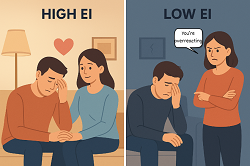
Couple A (High EI):
One partner notices the other is stressed after a long day, listens patiently, validates their feelings, and offers comfort instead of judgment.
Result: Conflict is avoided, and emotional closeness grows.
Couple B (Low EI):
One partner ignores the other’s stress, gets irritated at small things, and dismisses their feelings with “You’re overreacting.”
Result: Misunderstanding escalates, leading to arguments and emotional distance.
-
Simplified Difference:
EI = The ability itself (theory, practice, skillset).
EQ = The measurement of that ability (score, test result).
Think of it this way:
EI is like “fitness.”
EQ is like your “fitness test score.”
