
Relationship development refers to the process through which individuals build, maintain, and deepen connections with one another. This can apply to romantic relationships, friendships, family ties, or even professional interactions. The development of any relationship typically follows a series of stages, each with unique emotional, psychological, and communicative characteristics.
Key Stages of Relationship Development:
(Adapted from Knapp’s Relational Development Model, with additions for broader application)
-
Initiation (Getting to Know):
Goal: Make a good first impression.
Behaviors: Small talk, surface-level information exchange, politeness, physical appearance awareness.
Focus: Observation and impression management.
Example: Meeting someone at a party or workplace and exchanging names.

-
Experimentation (Exploring Compatibility):
Goal: Discover shared interests, values, and beliefs.
Behaviors: Asking questions, sharing more personal (yet still safe) details, seeking common ground.
Focus: Determine whether to pursue a deeper relationship.
Example: Going for coffee, finding out you both like hiking or have similar career goals.

-
Intensifying (Building Connection):
Goal: Deepen emotional investment.
Behaviors: More frequent communication, increased self-disclosure, affectionate language, private jokes, shared experiences.
Focus: Establish trust, care, and emotional intimacy.
Example: Talking daily, using pet names, sharing fears or goals.

-
Integration (Becoming a Unit):
Goal: Form a strong emotional and social bond.
Behaviors: Shared social circles, “we” language, coordinated routines, symbolic acts (e.g., giving keys, changing social media status).
Focus: Blending lives, values, and goals.
Example: Couples planning holidays together, best friends sharing everything.

-
Bonding (Commitment or Formalization):
Goal: Publicly express long-term commitment.
Behaviors: Engagement, marriage, business partnership, or formal social acknowledgment.
Focus: Stability and future-oriented investment.
Example: Signing a contract, wedding, cohabitation, family integration.

Possible Reversal or Decline Stages (Relationship Deterioration):

(Not all relationships continue upward; some reverse or dissolve.)
- Differentiating – “We” becomes “I”; individual needs outweigh shared goals.
- Circumscribing – Communication reduces; sensitive topics are avoided.
- Stagnating – The relationship feels stuck or routine; emotional distance grows.
- Avoiding – Physical or emotional withdrawal.
- Terminating – Ending the relationship formally or informally.
Key Influences on Relationship Development:
Communication:
- Foundation of trust, intimacy, and understanding.
- Active listening, empathy, and honesty are critical.
Emotional Intelligence:
- Managing one’s own emotions and responding appropriately to others.
- Helps resolve conflicts, express affection, and build empathy.
Mutual Goals and Values:
- Shared values help relationships last longer.
- Misaligned core beliefs often cause tension later.
Trust and Vulnerability:
- Trust is built slowly through consistency and reliability.
- Vulnerability deepens intimacy but requires emotional safety.
Conflict Resolution:
- Healthy relationships aren’t conflict-free—they manage conflict well.
- Respectful dialogue, compromise, and boundaries are key.
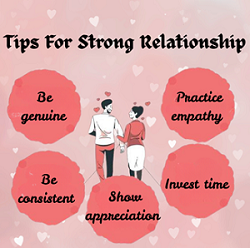
Tips for Developing Strong Relationships:
Be genuine – Authenticity builds stronger bonds than perfection.
Practice empathy – Try to understand the other person’s perspective.
Be consistent – Trust is built through reliable actions.
Show appreciation – Acknowledge the other person’s value and efforts.
Invest time – Relationships grow when you make time for each other.